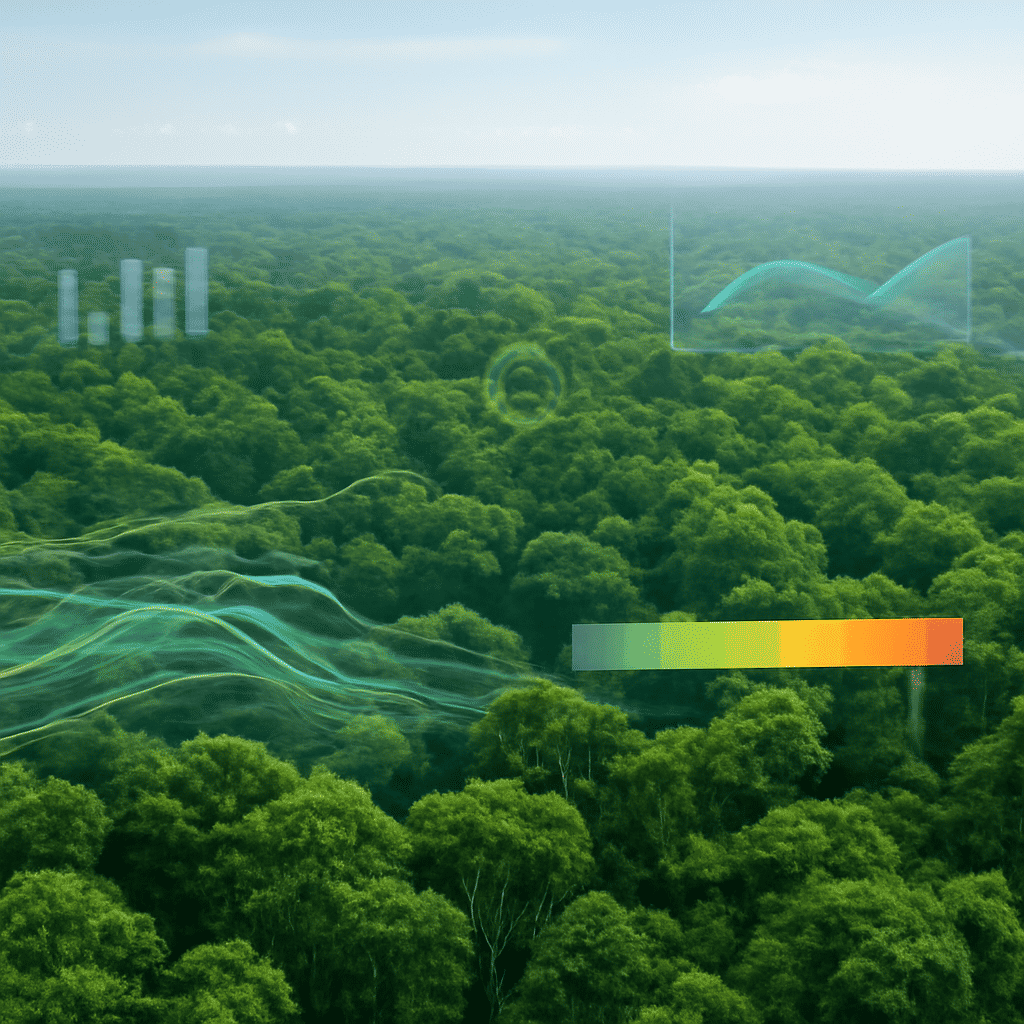
As climate change persists as one of the most pressing challenges facing humanity, the development of innovative technologies to track and understand its impact on global biospheres is not just timely but essential. These cutting-edge technologies are at the forefront of providing insights that are crucial for crafting effective climate strategies and policies.
One of the most promising innovations is the deployment of advanced satellite systems. These systems have evolved significantly from providing basic imagery to offering high-resolution, real-time data on various climate variables. Modern satellites are equipped with multispectral and hyperspectral sensors that can capture detailed information about land, ocean, and atmospheric conditions. They can detect even subtle changes in vegetation patterns, ocean temperatures, polar ice shifts, and greenhouse gas concentrations. Organizations like NASA and the European Space Agency (ESA) have launched satellites such as the Sentinel series, which are pivotal in monitoring the earth with unprecedented precision.
In tandem with satellite technology, drone technology has advanced dramatically, boosting the precision and scope of data collection. Drones can traverse areas that are hard to reach or too dangerous for humans, such as active volcano rims, glacial regions, and remote forests. They are used to collect granular data, ranging from the health of specific plant species to the intricate details of ecosystems under stress. The ability of drones to provide localized data complements the broad overview provided by satellites and enhances our understanding of on-ground realities.
Another breakthrough is the implementation of Internet of Things (IoT) devices across different ecosystems. IoT networks comprised of sensors and smart devices are being deployed in various habitats to monitor environmental conditions continuously. These devices measure variables such as soil moisture levels, atmospheric CO2 concentrations, and temperature fluctuations in real-time. In agricultural contexts, smart sensors are helping farmers optimize water use and manage crops more sustainably, thus reducing climate impact.
Artificial Intelligence (AI) is playing an increasingly significant role in analyzing the enormous datasets generated by these sophisticated monitoring systems. Machine learning algorithms can identify patterns and anomalies in climate data that are not immediately apparent through human analysis. AI can forecast climate trends more accurately by modeling complex climate systems and simulating various scenarios. It empowers researchers and policymakers with predictive insights that are vital for planning adaptive strategies in response to climate change.
Blockchain technology is also being explored for its potential to enhance climate tracking. By providing a transparent, incorruptible ledger for climate data, blockchain can ensure that the information shared about emissions, carbon trading, and other climate-related activities is both accurate and trustworthy. This transparency is crucial for international climate agreements, where reliable data is the foundation for enforcing commitments and verifying progress.
Finally, citizen science has emerged as a valuable component in the climate tracking arsenal. Mobile apps and online platforms have empowered individuals worldwide to contribute data, such as local temperature readings, storm impacts, and biodiversity observations. This decentralized data collection enriches global datasets and increases public engagement and awareness around climate issues.
In conclusion, the convergence of satellite technology, drones, IoT, AI, blockchain, and citizen science is revolutionizing how we track and understand climate change. These cutting-edge technologies provide a comprehensive suite of tools that enable scientists, policymakers, and individuals to gain deeper insights into climate dynamics and make informed decisions to mitigate its impacts. As these technologies continue to evolve, they hold the promise of fostering a more resilient and sustainable future for our planet.